When my wife and I were in Yosemite in September we happened to be driving near El Capitan on our way out of the park one afternoon. Seeing all sorts of cars parked along the side of the road and scores of people focused on the cliff, we stopped hoping to get a chance to watch some climbers climb or so we thought.
However, as we began to talk to people they explained that a rescue of an injured climber was in progress. And with some binoculars and my wife's telephoto lens we were able to hone in on the scene.
The rescue team was some fifteen hundred feet up starting to belay a guy down on a stretcher who had broken his arm. This was no small rescue either. To bring someone down they have to helicopter a three thousand foot, thirteen mm rope to the top and then belay from there. But I'll bet that climber was thankful for their efforts.
When we're in crisis or on a difficult life climb we too may need rescue. Ideally it is not because we were foolish or not careful. But there should be no shame in requiring the help of others. What might we need rescue for?
We may need rescue from our fears. Life's challenges, especially illnesses and injury, can cause our fear factor to go sky high. Therefore, we may need the help of someone who's been up this mountain before to help calm our fears. We might be wise to get some spiritual guidance and counseling. It's OK to be rescuing.
We may need rescue from unhelpful people. Many people mean well but do harm. They throw out easy answers, won't be quiet or leave us alone. They often want us to heal or get better the same way they did or they might not have a clue but want to tell us how to make it anyway. We need someone who can help us figure out how to respond kindly, but firmly. Or they can run some interference for us.
We may need rescue from everyday challenges. We can face financial, social, work and family problems when we're climbing our mountain. Everything gets harder when life is hard. Don't be afraid to ask for help from others, your church, a local group, a support group or whoever. Sometimes we forget that others have more resources than we do just because they aren't going through our challenges. And someday you may be in their position to help them.
We may need rescue from wrong thinking. Struggle and hardship can cause us to do all sorts of dumb things we would never do otherwise. We will sometimes do anything to lessen the pain. Have someone in your life who can speak truth to you without wavering. Get connected to God again or more closely and let Him remind you what is really the truth. Jesus said, "The truth will make you free."
So if you need to be rescued, don't hide. Let the search party do their job. You need to go on. They can help. Just don't do it by yourself.
Welcome to my Never Quit Climbing blog
A practical, inspirational blog designed to encourage and give hope to people who are climbing mountains of rock and granite or ones life has put in their way.
Showing posts with label recovery. Show all posts
Monday, December 16, 2013
Monday, February 25, 2013
Sometimes We Need Our Batteries Recharged
Have you ever been doing a presentation or working on a project and you get that message on your computer that the "battery power is low." There you are, ready to move on, to get it all done, and your computer is out of gas.
Or you've just entered your car, ready to head home or out on a trip and the car won't start and a light comes on telling you the battery is gone.
It probably would help if we could get a similar light or message when our personal batteries are low. Because it's one thing to have to postpone finishing your work on your laptop for a while or call a tow truck, but it's far more serious when we have a personal meltdown that is harder to fix.
Why might we be out of power? There are lots of reasons. Lack of sleep, overwork, too much stress, too busy, weak immune system, recent traumatic events, long-term illnesses and many others. The problem is we often keep pushing ahead thinking that we can make it. But often the decision not to stop leads to disastrous consequences like it does for the climber who pushes ahead on Everest when they know better.
So how do we avoid running out of electricity, so to speak? Can we head off the problems at the pass?
Sure we can. First, stay in tune with yourself and your schedule. Don't ignore times in your life or climb when things become harder than usual or there is greater pressure on you to perform. Periodically take inventory of what your week or month or even year looks like so you can see exactly where the extra challenges might come. I like to have a calendar that also shows the big picture not just what is on my phone each day or week.
Second, get rest and take care of yourself. Often when we're young (and most of us think we're young long after we really are) we think we can conquer the world and keep doing the same things and meeting the same expectations year after year. Let me tell you something - you can't! And it's OK. So that means you'll need more rest, more time to rejuvenate.
Third, let go of some things. You can't do it all and you do not have to. If you're climbing a mountain of illness or personal problems, you don't have to meet all the responsibilities you had before. You can't live your life to please others either. Give away some of your tasks and let someone else have the opportunity to do them.
Sometimes batteries get drained because someone simply forgot to turn something off. That happens and there is not much we can do about that. But if our batteries drain because we simply tried to do more than our emotional charge would hold then that's our fault. And the consequences aren't worth it. Recharge today.
Or you've just entered your car, ready to head home or out on a trip and the car won't start and a light comes on telling you the battery is gone.
It probably would help if we could get a similar light or message when our personal batteries are low. Because it's one thing to have to postpone finishing your work on your laptop for a while or call a tow truck, but it's far more serious when we have a personal meltdown that is harder to fix.
Why might we be out of power? There are lots of reasons. Lack of sleep, overwork, too much stress, too busy, weak immune system, recent traumatic events, long-term illnesses and many others. The problem is we often keep pushing ahead thinking that we can make it. But often the decision not to stop leads to disastrous consequences like it does for the climber who pushes ahead on Everest when they know better.
So how do we avoid running out of electricity, so to speak? Can we head off the problems at the pass?
Sure we can. First, stay in tune with yourself and your schedule. Don't ignore times in your life or climb when things become harder than usual or there is greater pressure on you to perform. Periodically take inventory of what your week or month or even year looks like so you can see exactly where the extra challenges might come. I like to have a calendar that also shows the big picture not just what is on my phone each day or week.
Second, get rest and take care of yourself. Often when we're young (and most of us think we're young long after we really are) we think we can conquer the world and keep doing the same things and meeting the same expectations year after year. Let me tell you something - you can't! And it's OK. So that means you'll need more rest, more time to rejuvenate.
Third, let go of some things. You can't do it all and you do not have to. If you're climbing a mountain of illness or personal problems, you don't have to meet all the responsibilities you had before. You can't live your life to please others either. Give away some of your tasks and let someone else have the opportunity to do them.
Sometimes batteries get drained because someone simply forgot to turn something off. That happens and there is not much we can do about that. But if our batteries drain because we simply tried to do more than our emotional charge would hold then that's our fault. And the consequences aren't worth it. Recharge today.
Saturday, January 19, 2013
Don't Forget The Essentials
The other day I went to the workout room at our condo complex as I do several times a week. I wore my usual sweat top and athletic pants as well since the weather was a little chilly.
Upon arriving I started to strip down to a T-shirt and shorts only to find out while removing my pants that I had forgotten to put on my gym shorts. Oops. Fortunately there was no one else there planning to work out or that could have been especially embarrassing.
I had forgotten one of the key components for my workout.
A lot of us also tend to forget key elements that we need when we're climbing our personal mountains.
For example, we can forget to take a good attitude with us each day. A good attitude doesn't mean that we're necessarily happy or smiling all the time. But it does mean that we don't walk around spending our time blaming others for our predicament or demanding that others meet our expectations that day. People will let us down and they don't necessarily stop and look at life through our eyes. They're not always understanding.
Our attitude nonetheless will make a huge difference in how we handle people and unexpected circumstances.
We can also forget to carry with us some faith . . . faith that there is Someone bigger than we are who is also bigger than our mountain. Faith that something good can come out of our circumstances, faith that we will can be a better person by being challenged the way we are.
We can also forget to think about others. We can get so focused on our climb that we don't serve or help anyone else. And yet some of our greatest growth will come when we care for other people even during our journey. We can actually heal better if we get the attention off of us and use what we've learned to help another person or family.
So don't go out today to face your mountain without your essentials. Think about how these three that I've suggested might be incorporated into your day. You might just be surprised at what you accomplish or conquer today that you never though was possible. You'll at least avoid some embarrassment!
Upon arriving I started to strip down to a T-shirt and shorts only to find out while removing my pants that I had forgotten to put on my gym shorts. Oops. Fortunately there was no one else there planning to work out or that could have been especially embarrassing.
I had forgotten one of the key components for my workout.
A lot of us also tend to forget key elements that we need when we're climbing our personal mountains.
For example, we can forget to take a good attitude with us each day. A good attitude doesn't mean that we're necessarily happy or smiling all the time. But it does mean that we don't walk around spending our time blaming others for our predicament or demanding that others meet our expectations that day. People will let us down and they don't necessarily stop and look at life through our eyes. They're not always understanding.
Our attitude nonetheless will make a huge difference in how we handle people and unexpected circumstances.
We can also forget to carry with us some faith . . . faith that there is Someone bigger than we are who is also bigger than our mountain. Faith that something good can come out of our circumstances, faith that we will can be a better person by being challenged the way we are.
We can also forget to think about others. We can get so focused on our climb that we don't serve or help anyone else. And yet some of our greatest growth will come when we care for other people even during our journey. We can actually heal better if we get the attention off of us and use what we've learned to help another person or family.
So don't go out today to face your mountain without your essentials. Think about how these three that I've suggested might be incorporated into your day. You might just be surprised at what you accomplish or conquer today that you never though was possible. You'll at least avoid some embarrassment!
Sunday, July 1, 2012
Sometimes a Next Right Step is Better Than A Big One
I was watching the U.S. Open for golf recently and heard commentator Johnny Miller say this when one of the pros was in a particularly difficult spot: When you get in trouble just get out of trouble. His point was that sometimes when a golfer hits a really bad shot he or she tries to then hit a spectacular one to make up for the loss. And often the results are worse.
The same is true in life climbing. We may run into a major snag on our journey, one caused by our own miss-hit, life in general or someone else's actions. It doesn't matter what the cause is. It's usually best to simply do what will get us out of the current trouble and not try to fix everything all at once.
Perhaps our health got worse, our marriage didn't improve, we got laid off instead of just a pay-reduction or our child rebelled even more rather than return home. It's tempting to overreact and do way too much when that happens rather than take a logical next, but perhaps less ambitious, step.
There are several bad outcomes if we don't heed Johnny Miller's advice. First of all, we will probably hurt other people. Our desperation to fix the problem in a big way or to solve everything now usually initiates a lot of pressure on others as we demand that things get better. As a result we speak harshly or act inappropriately towards those who have been there for us all along.
Second, we can make our situation worse. Like the golfer whose shot into the woods next lands in a sand trap, our lack of patience can cause our world and the world of those around us to become even messier, not better. Our health declines, we spend too much money, we ruin a relationship or whatever because we thought we could fix everything now. It rarely works.
Third, we can hinder future options that could ultimately help us. Sometimes we just need to get out of the current trouble by focusing only on what just happened and how to take one small step toward a solution.
If you're in an out of bounds situation on your journey, focus only on what will help you get back to normal, back to safety and health. You don't have to have a major jump forward here to keep all the momentum going. Just get from out of bounds onto the fairway. Hit a short, easy shot that will set you up for success and future growth.
A little trouble now can ward off a lot of trouble and struggle later.
The same is true in life climbing. We may run into a major snag on our journey, one caused by our own miss-hit, life in general or someone else's actions. It doesn't matter what the cause is. It's usually best to simply do what will get us out of the current trouble and not try to fix everything all at once.
Perhaps our health got worse, our marriage didn't improve, we got laid off instead of just a pay-reduction or our child rebelled even more rather than return home. It's tempting to overreact and do way too much when that happens rather than take a logical next, but perhaps less ambitious, step.
There are several bad outcomes if we don't heed Johnny Miller's advice. First of all, we will probably hurt other people. Our desperation to fix the problem in a big way or to solve everything now usually initiates a lot of pressure on others as we demand that things get better. As a result we speak harshly or act inappropriately towards those who have been there for us all along.
Second, we can make our situation worse. Like the golfer whose shot into the woods next lands in a sand trap, our lack of patience can cause our world and the world of those around us to become even messier, not better. Our health declines, we spend too much money, we ruin a relationship or whatever because we thought we could fix everything now. It rarely works.
Third, we can hinder future options that could ultimately help us. Sometimes we just need to get out of the current trouble by focusing only on what just happened and how to take one small step toward a solution.
If you're in an out of bounds situation on your journey, focus only on what will help you get back to normal, back to safety and health. You don't have to have a major jump forward here to keep all the momentum going. Just get from out of bounds onto the fairway. Hit a short, easy shot that will set you up for success and future growth.
A little trouble now can ward off a lot of trouble and struggle later.
Saturday, November 5, 2011
Sometimes You Just Need To Turn Around
A number of years ago my daughter and I were doing our third 14er in Colorado together. We were climbing San Luis Peak, a long steady walk-up that we had to add an extra mile onto because we didn't have four-wheel drive.
Outside of a 700 foot vertical descent on the way up (meaning we'd have to climb it on the way down) we were pretty sure the summit wouldn't be too great of a challenge. However, as we headed up the final ridge toward the top we saw storm clouds starting to form in the distance. It was still well before noon and we hadn't seen any lightning so we continued upward.
In fact we'd seen a guy climbing ahead of us and were pretty sure he had summited by now. Sure enough we met him as he was descending. We asked him what he thought about the clouds and he felt like the storm wasn't going to come our way. He wished us good luck, we thanked him and continued on. However, something just didn't seem right. I could see the angst on my daughter's face and frankly I began to worry too.
Being people of faith I decided we would pray for wisdom right there on the side of the mountain. Within about a minute of my "Amen" a bolt of lighting flashed somewhere beyond the summit and we were convinced we needed to get out of there. Just twenty minutes from the summit we had to give up. I hate not making it especially when I know I might not get a chance to return.
However, I've never regretted our decision once. We could have been killed if we'd continued and as climber extraordinaire Ed Viesturs says, getting down must be part of the goal. When we're climbing life mountains we may have to also sometimes turn around. We may have a goal in mind that we're simply not going to reach, at least that day. It's OK. If it's dangerous or simply too much to handle we may need to stop.
Sometimes we need a break to rest or get our bearings. We may need to pause now to save or store up energy for the next phase of the journey.
Whatever the reasons, don't hesitate to or fear stopping or retreating for awhile. It's never worth it to keep going if it's going to cost you more than you ever wanted to give, including your life.
Outside of a 700 foot vertical descent on the way up (meaning we'd have to climb it on the way down) we were pretty sure the summit wouldn't be too great of a challenge. However, as we headed up the final ridge toward the top we saw storm clouds starting to form in the distance. It was still well before noon and we hadn't seen any lightning so we continued upward.
In fact we'd seen a guy climbing ahead of us and were pretty sure he had summited by now. Sure enough we met him as he was descending. We asked him what he thought about the clouds and he felt like the storm wasn't going to come our way. He wished us good luck, we thanked him and continued on. However, something just didn't seem right. I could see the angst on my daughter's face and frankly I began to worry too.
Being people of faith I decided we would pray for wisdom right there on the side of the mountain. Within about a minute of my "Amen" a bolt of lighting flashed somewhere beyond the summit and we were convinced we needed to get out of there. Just twenty minutes from the summit we had to give up. I hate not making it especially when I know I might not get a chance to return.
However, I've never regretted our decision once. We could have been killed if we'd continued and as climber extraordinaire Ed Viesturs says, getting down must be part of the goal. When we're climbing life mountains we may have to also sometimes turn around. We may have a goal in mind that we're simply not going to reach, at least that day. It's OK. If it's dangerous or simply too much to handle we may need to stop.
Sometimes we need a break to rest or get our bearings. We may need to pause now to save or store up energy for the next phase of the journey.
Whatever the reasons, don't hesitate to or fear stopping or retreating for awhile. It's never worth it to keep going if it's going to cost you more than you ever wanted to give, including your life.
Monday, October 3, 2011
Recovery and Restoration: Don't Stay Green!
My little two-year-old grandson is just learning about his colors. The problem is he thinks every color is called "green."
And that of course is normal for someone his age.
However, it's easy for us to think that our lives are only the one color of our struggle. It defines us, runs our lives every day and is what we think about most of the time. And yes, some challenges are pretty life defining. We have a right to say, "If I didn't have this illness (or family struggle or loss), my life would be defined very differently."
But the color of our world doesn't only have to reflect our struggle or the personal mountain we're climbing. If we're going to get better, get healthy or at least make progress on our journey we have to give ourselves permission to think about and live for something else.
While our climb may feel like it dominates our lives these days, it doesn't have the right to own us. Let me suggest a couple of ways to get in touch with that truth.
First, look for ways to help other people and not focus on yourself. You might be able to offer comfort or encouragement to someone behind you on the path of your climb. Or you can consider just serving in a totally unrelated way. Whatever you choose invest in someone else. It will color your world in some new and meaningful ways.
Second, be intentionally thankful. There is always someone hurting more than you. And there are always things we can be thankful for even in the worst of times. Make a list now and then or pull your family together and just call out some ways you all can thank God for His blessings to you. An "attitude of gratitude" can change us in dramatic ways.
Third, make a list of ten things you've always wanted to do. And then pick one or two that you'll try this year. Get out of your "greenness" and put some new color, new excitement, new challenges into your life that have little to do with your mountain or struggle. Sometimes just a chance of pace and location make huge differences in our perspective.
As Kermit the Frog used to say, "It's not easy being green." And I would add, "It's not fun being the same color all the time." Turn up the color in your world.
And that of course is normal for someone his age.
However, it's easy for us to think that our lives are only the one color of our struggle. It defines us, runs our lives every day and is what we think about most of the time. And yes, some challenges are pretty life defining. We have a right to say, "If I didn't have this illness (or family struggle or loss), my life would be defined very differently."
But the color of our world doesn't only have to reflect our struggle or the personal mountain we're climbing. If we're going to get better, get healthy or at least make progress on our journey we have to give ourselves permission to think about and live for something else.
While our climb may feel like it dominates our lives these days, it doesn't have the right to own us. Let me suggest a couple of ways to get in touch with that truth.
First, look for ways to help other people and not focus on yourself. You might be able to offer comfort or encouragement to someone behind you on the path of your climb. Or you can consider just serving in a totally unrelated way. Whatever you choose invest in someone else. It will color your world in some new and meaningful ways.
Second, be intentionally thankful. There is always someone hurting more than you. And there are always things we can be thankful for even in the worst of times. Make a list now and then or pull your family together and just call out some ways you all can thank God for His blessings to you. An "attitude of gratitude" can change us in dramatic ways.
Third, make a list of ten things you've always wanted to do. And then pick one or two that you'll try this year. Get out of your "greenness" and put some new color, new excitement, new challenges into your life that have little to do with your mountain or struggle. Sometimes just a chance of pace and location make huge differences in our perspective.
As Kermit the Frog used to say, "It's not easy being green." And I would add, "It's not fun being the same color all the time." Turn up the color in your world.
Saturday, August 27, 2011
Adversity and Recovery: All About Perspective
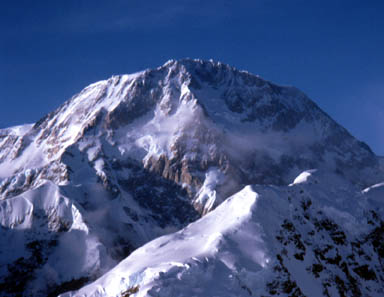
Most mountains are big. But they don't always look that way. While in Alaska recently we saw Denali (Mt McKinley) from a hundred and fifty miles away or so. It wasn't that impressive. But up close, it's massive.
Flying over the Rockies, those 14ers looked more like large cupcakes with lots of white icing (beautiful!) but not the imposing pieces of granite they truly are when you're trudging to the top of one.
I always remember our first view of Pikes Peak when we would drive from the Midwest to Colorado. We always wanted to be the first one to see it. Even so it began as just a shadow in the distance not the huge peak that it is.
You see the size of a mountain is all about perspective. Where we're looking from, how far away we are and what we're comparing it to. Now granted the mountain is still what it is - 5000, 14,000 or 28,000 feet high. Perspective doesn't change the actual size of our mountain but it can radically alter our attitude and ability to climb.
So when we're climbing life's mountains, how can we obtain new, helpful perspective? First, if you can, climb some real mountains. Climbing takes you to the high places where you can be reminded that there is a bigger picture concerning life. Climbing reminds you of a Creator or at least suggests that you ponder Him. It's hard to imagine that what you see is just an "accident" of nature.
Second, spend some time with others climbing mountains similar to yours. Those people can give you a new look at what you're facing because of their experiences while sometimes reminding you that your mountain isn't as high as theirs.
Third, as I often suggest in these blog posts, climb only one section of your mountain at a time. The whole mountain will be overwhelming if you only look at it as a whole. But when you just concentrate on one section, you begin to get comfortable with the fact that you can climb that much.
If you're struggling on your climb today, maybe you need some new perspective. Take a hike, find a friend, determine to get to the next part of the trailhead. Your mountain is big but maybe not as big as you think.
Flying over the Rockies, those 14ers looked more like large cupcakes with lots of white icing (beautiful!) but not the imposing pieces of granite they truly are when you're trudging to the top of one.
I always remember our first view of Pikes Peak when we would drive from the Midwest to Colorado. We always wanted to be the first one to see it. Even so it began as just a shadow in the distance not the huge peak that it is.
You see the size of a mountain is all about perspective. Where we're looking from, how far away we are and what we're comparing it to. Now granted the mountain is still what it is - 5000, 14,000 or 28,000 feet high. Perspective doesn't change the actual size of our mountain but it can radically alter our attitude and ability to climb.
So when we're climbing life's mountains, how can we obtain new, helpful perspective? First, if you can, climb some real mountains. Climbing takes you to the high places where you can be reminded that there is a bigger picture concerning life. Climbing reminds you of a Creator or at least suggests that you ponder Him. It's hard to imagine that what you see is just an "accident" of nature.
Second, spend some time with others climbing mountains similar to yours. Those people can give you a new look at what you're facing because of their experiences while sometimes reminding you that your mountain isn't as high as theirs.
Third, as I often suggest in these blog posts, climb only one section of your mountain at a time. The whole mountain will be overwhelming if you only look at it as a whole. But when you just concentrate on one section, you begin to get comfortable with the fact that you can climb that much.
If you're struggling on your climb today, maybe you need some new perspective. Take a hike, find a friend, determine to get to the next part of the trailhead. Your mountain is big but maybe not as big as you think.
Subscribe to:
Posts (Atom)